November 28, 2026The GUZZI ART worlds
Who Lives in the Work: Inside the GUZZI ART Census
A journal from the studio on reading crowded paintings, recurring beings, and what the house's own Census reveals about Daniel Cordoba's worlds.
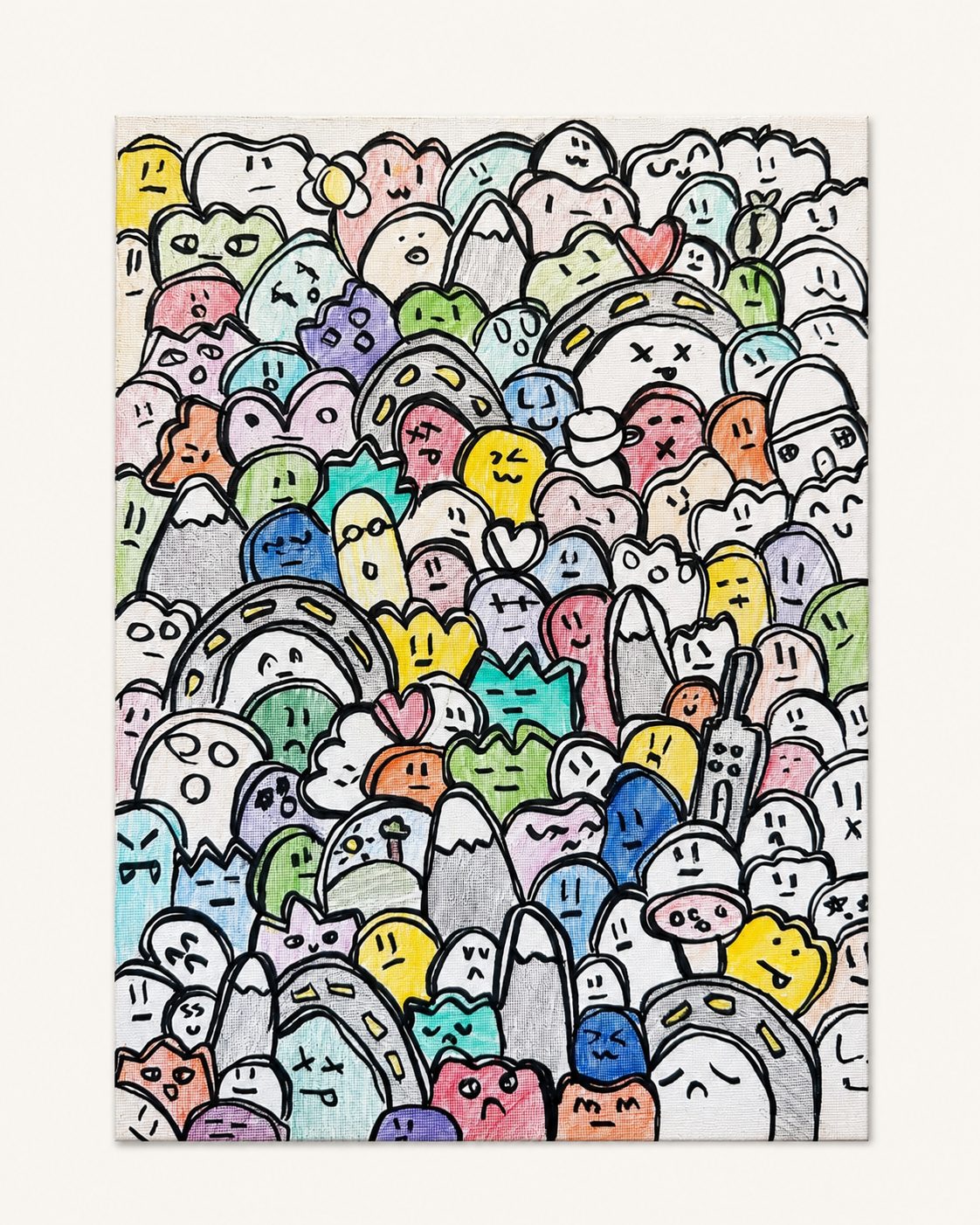
There is a quiet moment, after a painting is finished, when the artist stops making and starts counting. Not brushstrokes — beings. The small figure wedged between two rooftops. The hatted silhouette at the edge of a crowd. The thing that is almost a cloud and almost a face. Each one is looked at, considered, and given its place in what the studio has come to call the Census.
What an art census actually is
An art census is a working record a studio keeps of the characters and objects that live inside its paintings. It is not a catalogue of artworks, and it is not a price list. It is closer to a civic register: a way of saying this being exists, it has appeared here, and here is its page. For a body of work as populated as Daniel Cordoba's — processions, gatherings, floating cities, carnivals of cardboard — the Census is the way the worlds hold together.
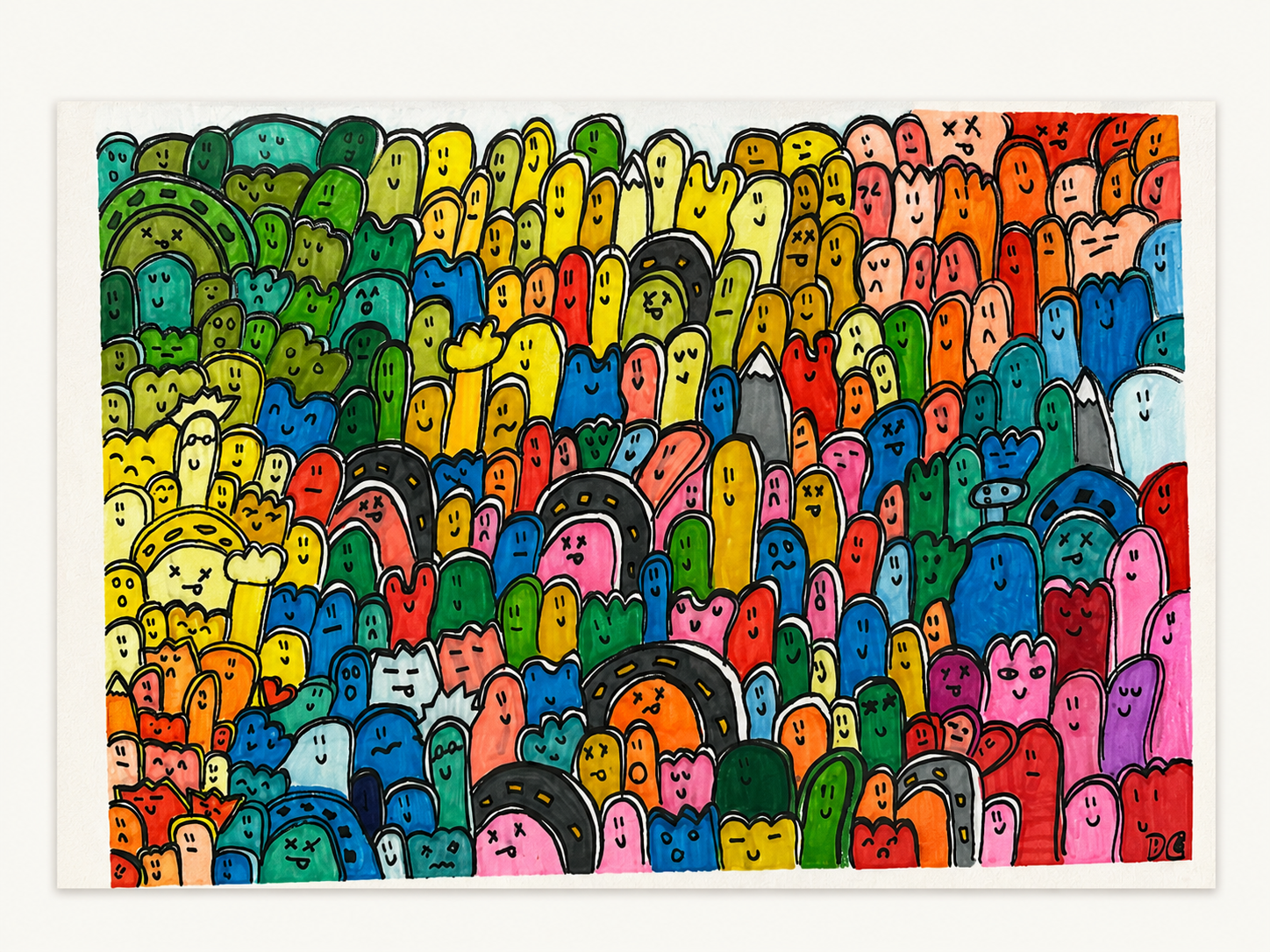
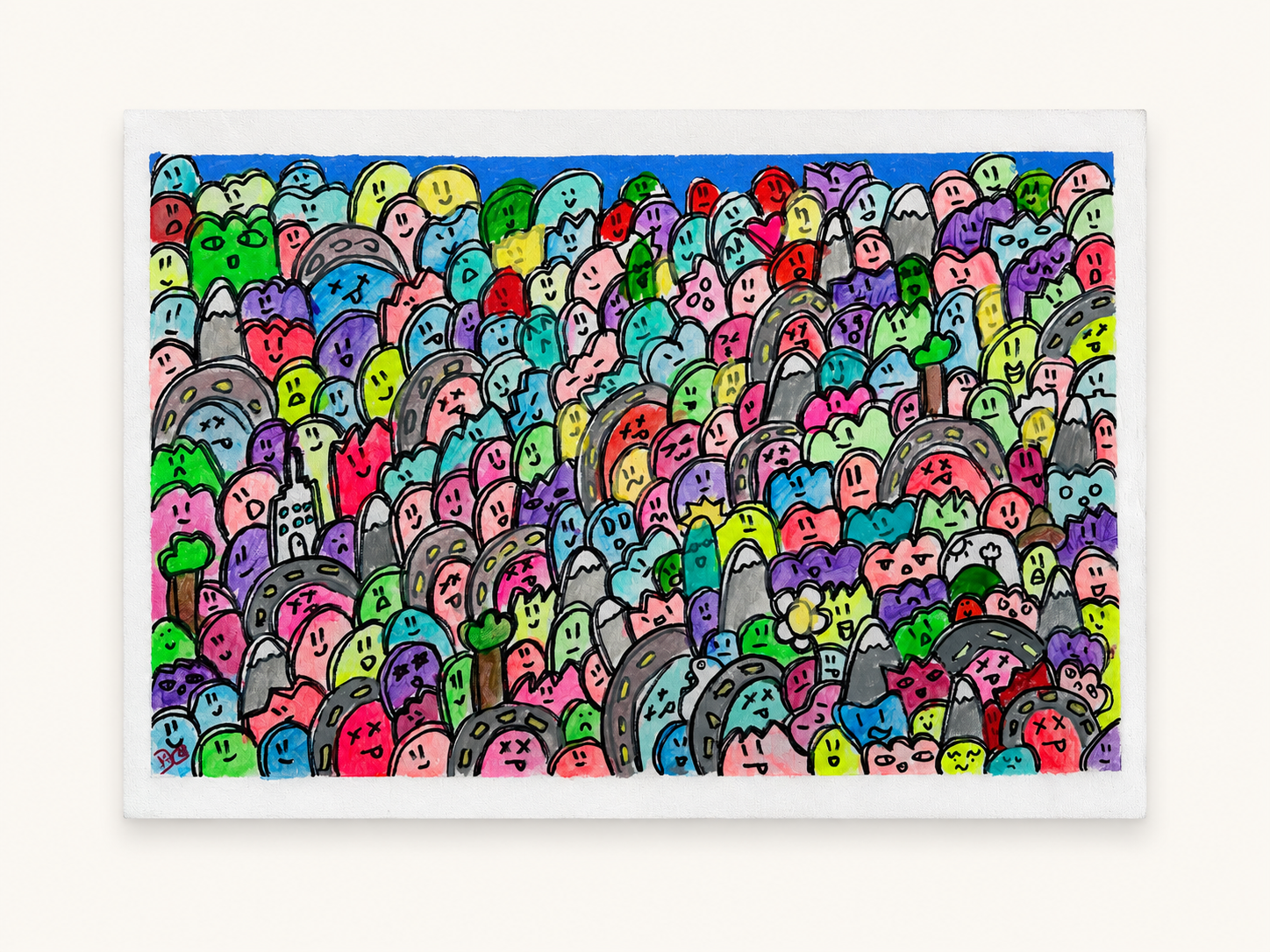
Readers often ask how many characters are in a painting. The honest answer is: more than you think, and the number is rarely the point. A work like The Gathering or Endless Crowd is built to overflow the eye. The Census is simply the artist's way of refusing to let any of them stay anonymous.
How to read a crowded painting
Crowded paintings reward slow looking. A few habits help:
- Start at the edges, not the centre. The margins of a piece like Cardboard Carnival are where the quieter beings tend to live.
- Follow repetition. If a hat, a posture or a colour appears twice, it is usually a signal — the same being, or its kin.
- Count the things, not only the figures. A moon, a melon, a flag can be a character too.
- Let one being lead you. Choose a single face and trace what it is looking at. The composition will often open from there.
Do artists reuse characters across paintings?
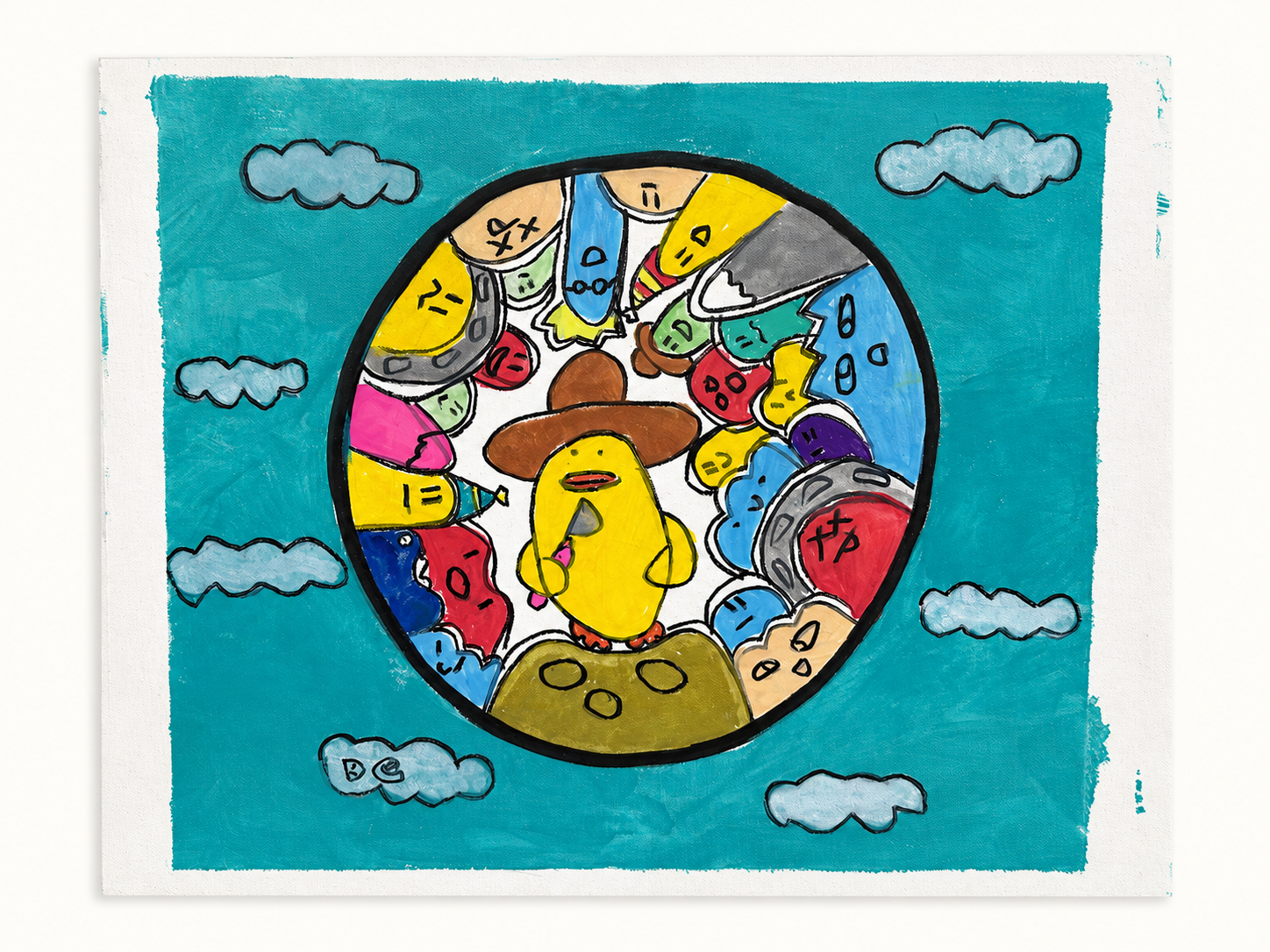
Many do, and Cordoba is among them. A being met in one painting may reappear, older or stranger, in another. The Hat Character is the clearest example — a silhouette that drifts between pieces, including Hat on Blue, carrying its own weather with it. Following a single character across several works is one of the real pleasures of collecting a living body of work: the paintings begin to speak to each other.
By the numbers
The following come from the house's own records, counted on 25 October 2026:
- 17 of the house's 50 works have been counted and closed.
- In those 17 works live at least 122 beings and 4 things.
- 77 beings have been recognised as individuals with a page of their own.
- 11 of those 77 appear in more than one work.
Read plainly, the figures describe a world that is both dense and intimate: a handful of closed pieces already holding a small town's worth of inhabitants, and a growing cast of recurring faces that cross from one painting into the next.
Why this matters for collectors
When you live with a GUZZI ART piece, you are not only hanging an image on a wall. You are taking in a population. The Census is a way of honouring that — of saying the small figure in the corner has a name of its own, a history, and perhaps a cameo elsewhere in the work. It is also why the gallery rewards return visits: the worlds keep thickening.
If this is your first encounter with the studio, the gallery is the place to begin — and the Inner Circle is where collectors hear first when a new piece is closed and its inhabitants enter the record. Follow a being, and the rest of the work tends to follow you.
Counted from the house's Census: only works the artist has closed are counted; every being was found, considered and entered by the artist's own hand; no count is ever final.
GUZZI ART Studio · edited by David Nistal · the Studio
House record · counted by the house on Oct 25, 2026 — Counted from the house's Census: only works the artist has closed are counted; every being was found, considered and entered by the artist's own hand; no count is ever final.
Sources
- 01GUZZI ART — The Census (house record, counted 2026-10-25) · guzziart.com · Oct 25, 2026
- 02Slow Looking/Deep Seeing - Weatherspoon Art Museum · Weatherspoon Art Museum“Crowded paintings reward slow looking.”
- 03Takashi Murakami - Perrotin · Perrotin“Do artists reuse characters across paintings? Many do”
- 04Exhibitions, Edvard Munch: Technically Speaking · Harvard Art Museums“Do artists reuse characters across paintings? Many do”
Share this story
The Journal by letter
One letter per new piece
The title, the Room it lives in, the first lines — about once a week, nothing else. Leave with one click, any time.
Related pieces
Own a piece of the universe
Explore the original collectible works, or join the Inner Circle for a first look at new pieces before they're released.