October 10, 2026
The Artist as Vessel: Inside the GUZZI ART Practice
On the idea of the art vessel in Daniel Cordoba's practice — how a self-taught painter becomes a conduit for color, pattern and quiet signal.
What We Mean When We Say "Vessel"
In older studio language, a painter was sometimes called a vessel — not the author of an image, but the channel through which something arrived. The word has drifted out of fashion, replaced by the vocabulary of branding and intention. Yet when you spend time with the work in the GUZZI ART archive, the older word keeps returning. Daniel Cordoba, self-taught and still young, paints the way certain musicians play: listening more than deciding, following a frequency rather than imposing one.
This is not mysticism for its own sake. It is a working method. And for collectors beginning to trace the arc of his practice, understanding it changes how the paintings read on the wall.
The Studio as Receiver
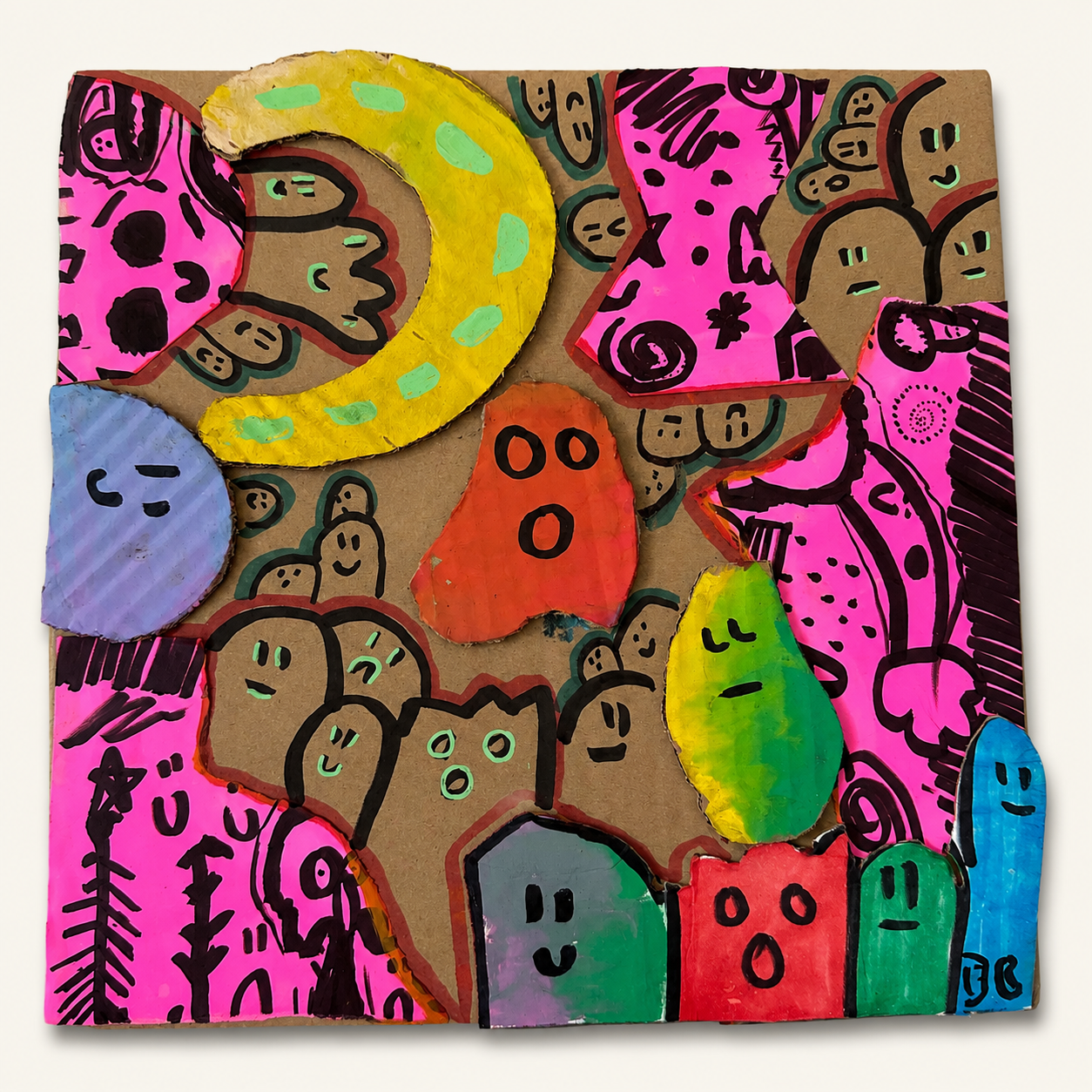
Cordoba's canvases rarely begin with a sketch. They begin with a mood, a weather, sometimes a single color pressed into the center of the surface until it suggests the rest. The forms that emerge — hooded figures, floating architectures, dense fields of marks — are not illustrations of ideas he had beforehand. They are what the painting asked for while it was being made.
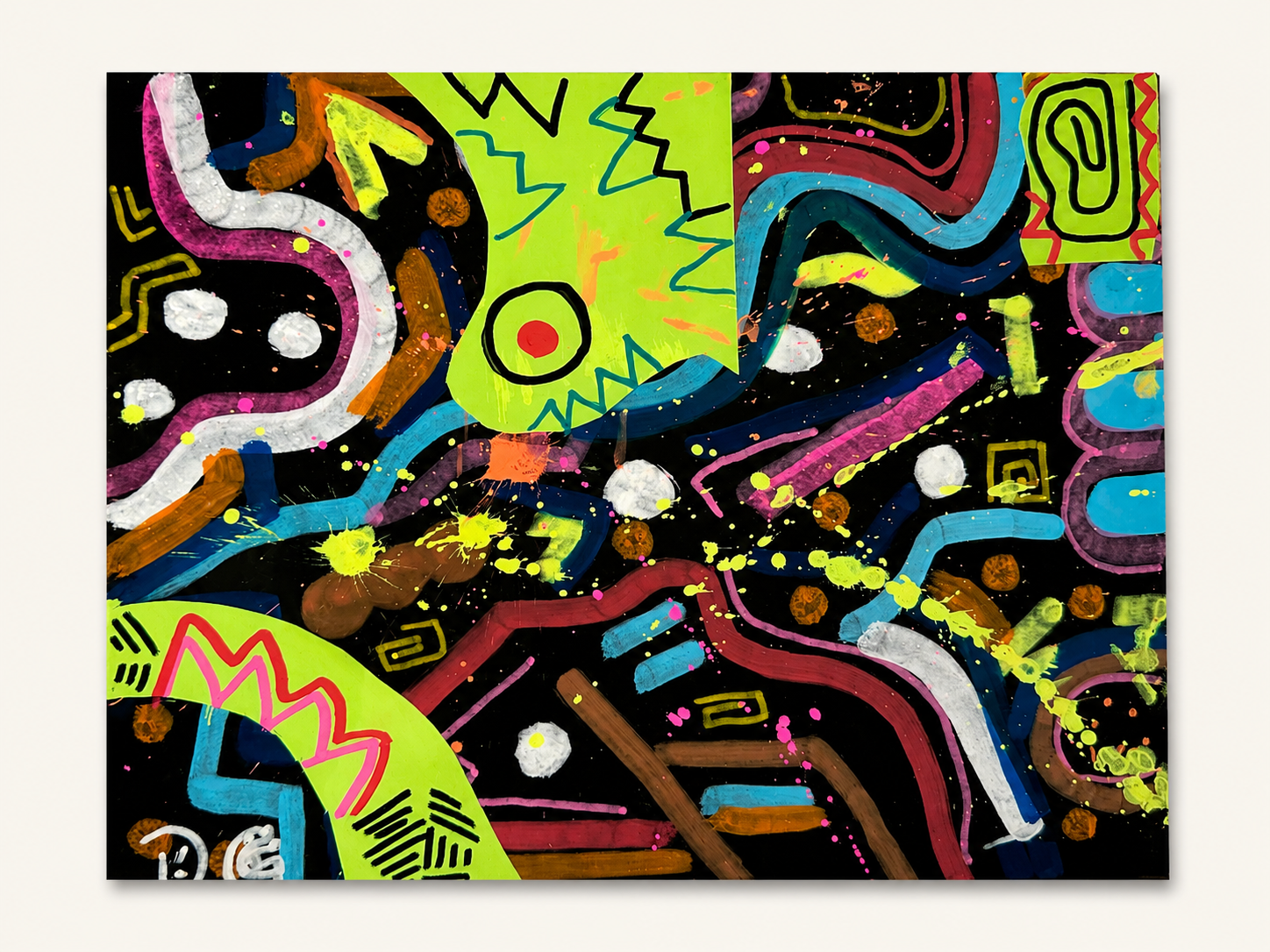
You can see this most clearly in works like Pattern Dimension, where the composition seems to have organized itself out of its own repetitions, or in Centre of Calm, which arrives at stillness through accumulation rather than restraint. Both read as transmissions as much as compositions.
Why This Matters for Collectors
Collectible contemporary art is often sold on biography — the school, the gallery, the press cycle. A self-taught practice bypasses most of that machinery, which can make it harder to place and, for the attentive collector, more interesting to acquire. What you are buying is not a position within a market structure but a direct record of a sensibility.
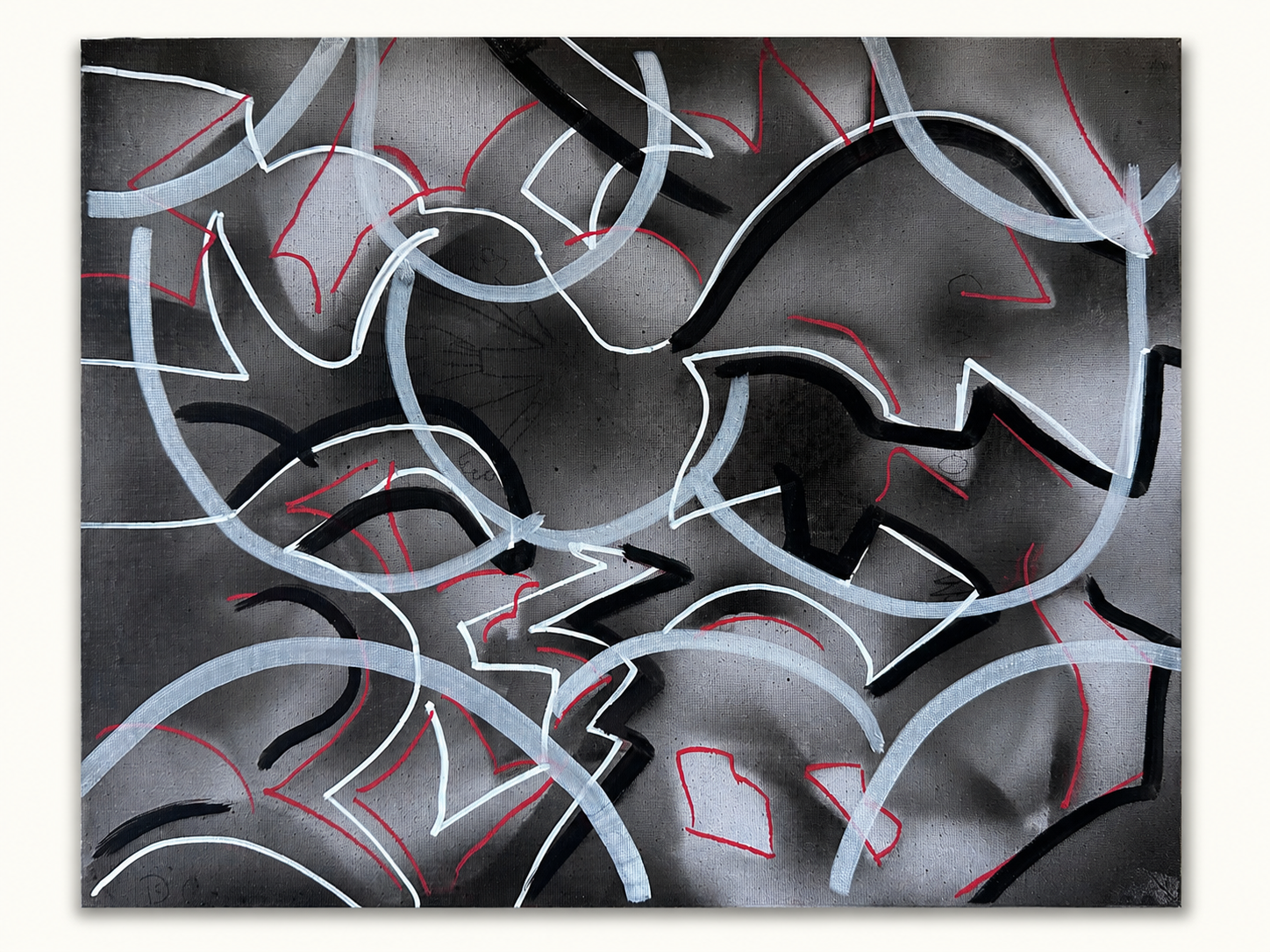
When people search for guzzi art or dig through the guzzi archive, they are usually trying to answer one question: is there a through-line? The answer is yes, and the through-line is the vessel idea. Across radically different palettes — the hot reds of Fire Spirits, the muted static of Silver Storm, the sweetness of Pink Frequencies — the same listening hand is at work.
Reading a Vessel-Painting
A few things to look for when you encounter a Cordoba in person or in the archive:
- Mark density. The surfaces are built, not placed. Count the layers before you decide what the painting is doing.
- Figure as weather. Characters rarely act; they appear, like fronts of pressure. They are states, not narratives.
- Pattern as signal. Repetition in these works functions less like decoration and more like a carrier wave — the structure that lets the quieter content travel.
- Edges. Where the painting stops is often where it tells the truth. Watch the corners.
The Archive as a Living Thing
An archive is usually imagined as something closed — a vault of finished objects. The GUZZI ART archive behaves differently. Each new body of work reframes the earlier ones, so a painting from two years ago can suddenly feel like the opening sentence of a chapter being written now. This is what happens when the artist works as a vessel rather than a strategist: the catalogue coheres in retrospect, not in advance.
For a collector, this is the quiet thrill. You are not acquiring a position in a trend. You are acquiring a frequency, early.
Browse the current gallery to see which works are speaking most clearly to you right now, or join the Inner Circle to receive new pieces, studio notes and archive openings before they reach the public rooms.
Daniel Cordoba · edited by David Nistal · the Studio
Share this story
The Journal by letter
One letter per new piece
The title, the Room it lives in, the first lines — about once a week, nothing else. Leave with one click, any time.
Own a piece of the universe
Explore the original collectible works, or join the Inner Circle for a first look at new pieces before they're released.